Drying & process
Can Water-Damaged Drywall Be Saved?
Updated · Copperline editorial
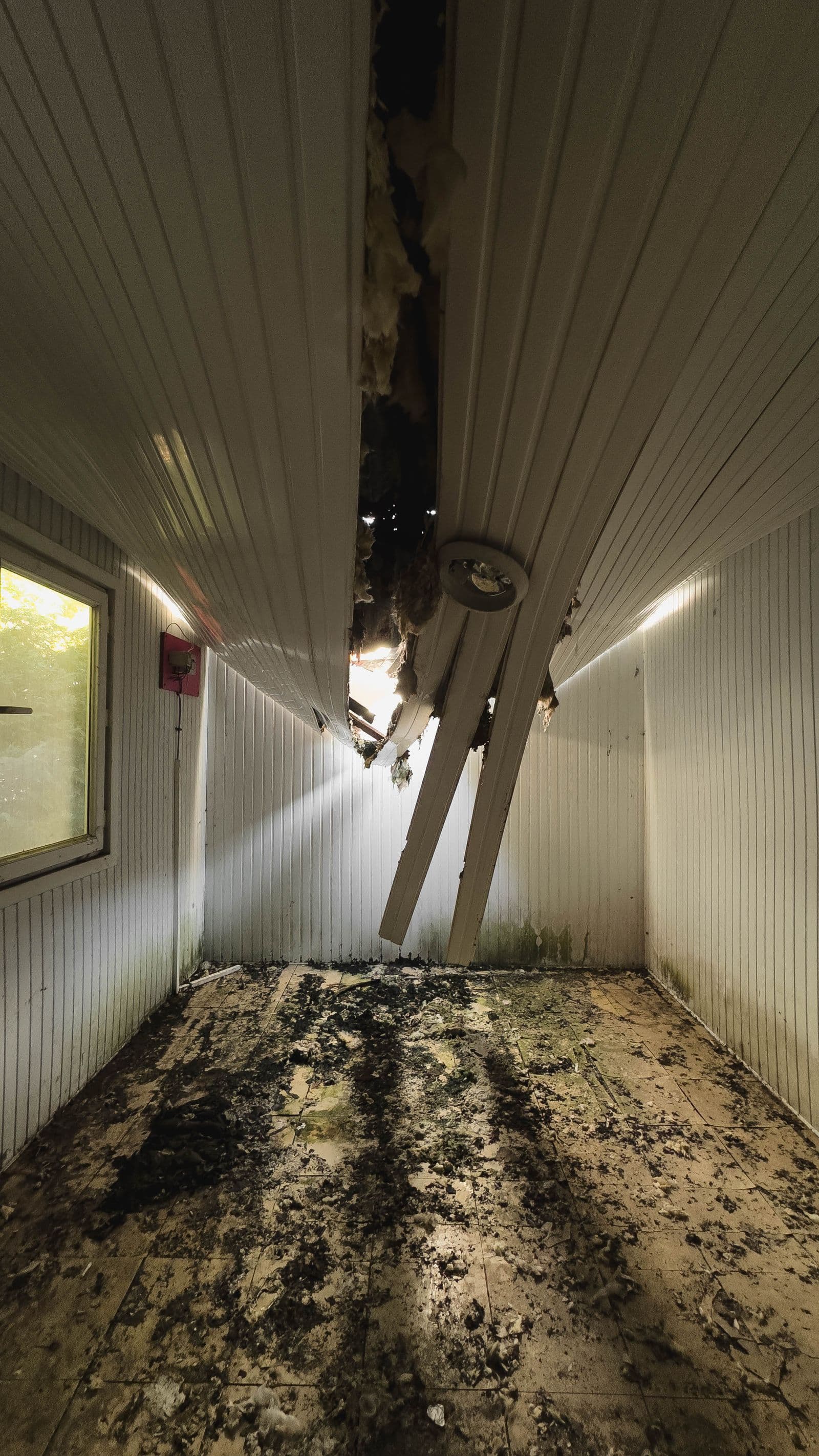
Signs it can usually be dried
- Clean water source (supply line, appliance)
- Wet for less than 24–48 hours
- Firm to the touch, not crumbling or swollen
- No wet insulation in the cavity
Signs it needs to be replaced
- Sewage, toilet or outside floodwater
- Sagging ceilings or bulging walls
- Soft, crumbling or delaminated paper
- Visible mold or a musty smell
- Batt insulation soaked behind it
The 'flood cut'
When only the lower part of a wall is affected, restorers often cut drywall a foot or two above the wet line so the cavity can dry and the bottom plate can be checked. It's cheaper to patch a straight cut than to chase moisture later.
Measure, don't guess
A moisture meter tells you where the wet area ends. Moisture mapping keeps the tear-out as small as possible.
Flood cuts and why they're common
When the bottom of a wall got wet, technicians often cut drywall a couple of feet above the waterline to reach wet insulation and let the cavity dry. It's faster and more reliable than trying to dry a closed, insulated wall.
Can Water-Damaged Drywall Be Saved?: follow-up questions
Can drywall be saved after a leak?
Often yes, if it got wet from clean water, is still firm, and dries within a day or two. Sagging, crumbling or sewage-soaked drywall is replaced.
Does wet insulation need replacing?
Fiberglass batts that got soaked usually come out; they hold water and lose effectiveness.
Every home differs; editorial standards.