Emergencies
What to Do After a Pipe Bursts
Updated · Copperline editorial
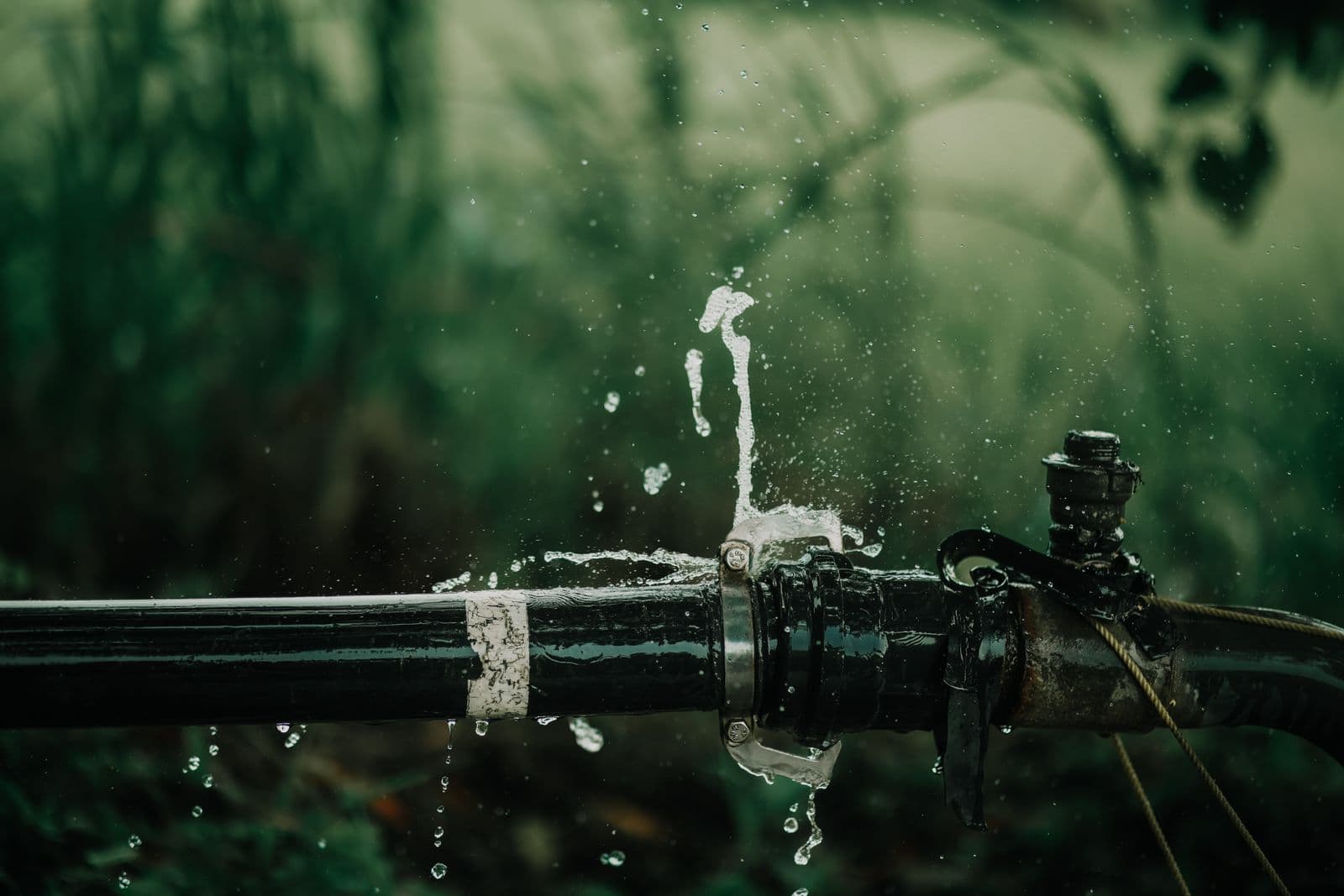
1. Stop the water
Find the main shutoff where the water line enters the house — often in the garage, a utility closet, or on an outside wall facing the street. Turn a round handle clockwise until it stops, or a lever a quarter turn. If you can't find it, the curb valve in the meter box also shuts off the house.
2. Make it safe
If water is near outlets, the electrical panel or light fixtures, switch that circuit off at the breaker. Don't walk through standing water to reach the panel — call the electric utility instead.
3. Limit the spread
Open a cold faucet on the lowest floor to drain water still in the pipes. Move furniture and rugs off wet floors, and put foil or blocks under furniture legs so wood doesn't wick up water.
4. Document before cleanup
Photograph and video the break, the water, and every damaged room and item before anything is moved or thrown away. Your insurer will want to see the damage as it was.
5. Call the right people
A plumber repairs the pipe. A water damage restoration company extracts the water, removes materials that trap moisture, and dries the structure with equipment and moisture readings. Starting drying within 24–48 hours limits what has to be torn out.
What restoration adds after the plumber
A plumber fixes the pipe; a restoration company deals with the water that already escaped. That means extracting standing water, checking walls, floors and cabinets with moisture meters, and setting air movers and dehumidifiers until the readings reach dry standard. Wet drywall and baseboards behind cabinets are the places most often missed when a home is dried by fans alone.
What to Do After a Pipe Bursts: follow-up questions
How soon should drying start after a burst pipe?
As soon as possible, ideally the same day. Mold can begin to grow on wet drywall and wood within about 24 to 48 hours, especially in a warm house.
Can I dry it myself with fans?
Surface water on tile may dry with fans, but water that wicked into drywall, insulation, cabinets or under flooring needs moisture readings to confirm it is dry.
Every home differs; editorial standards.